


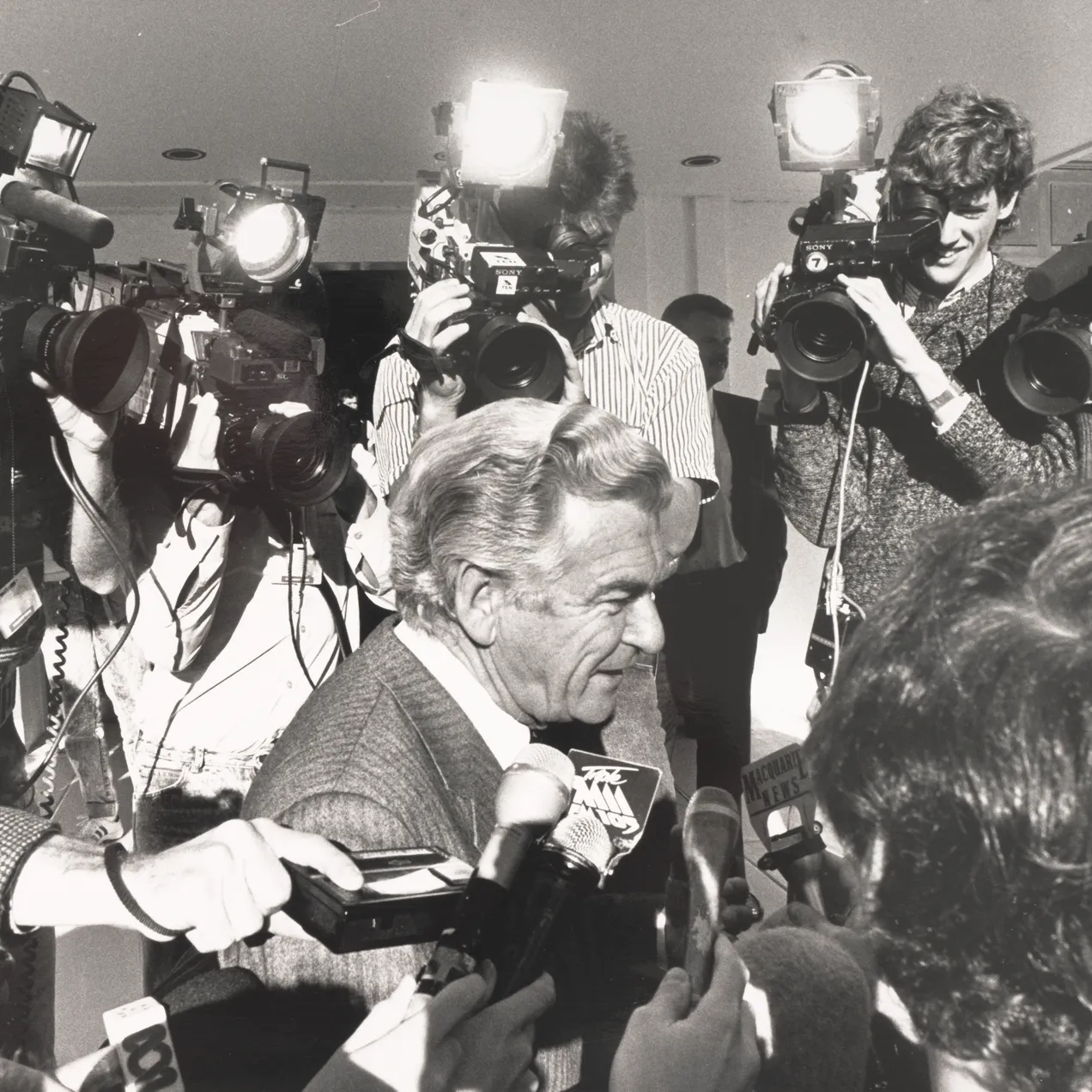
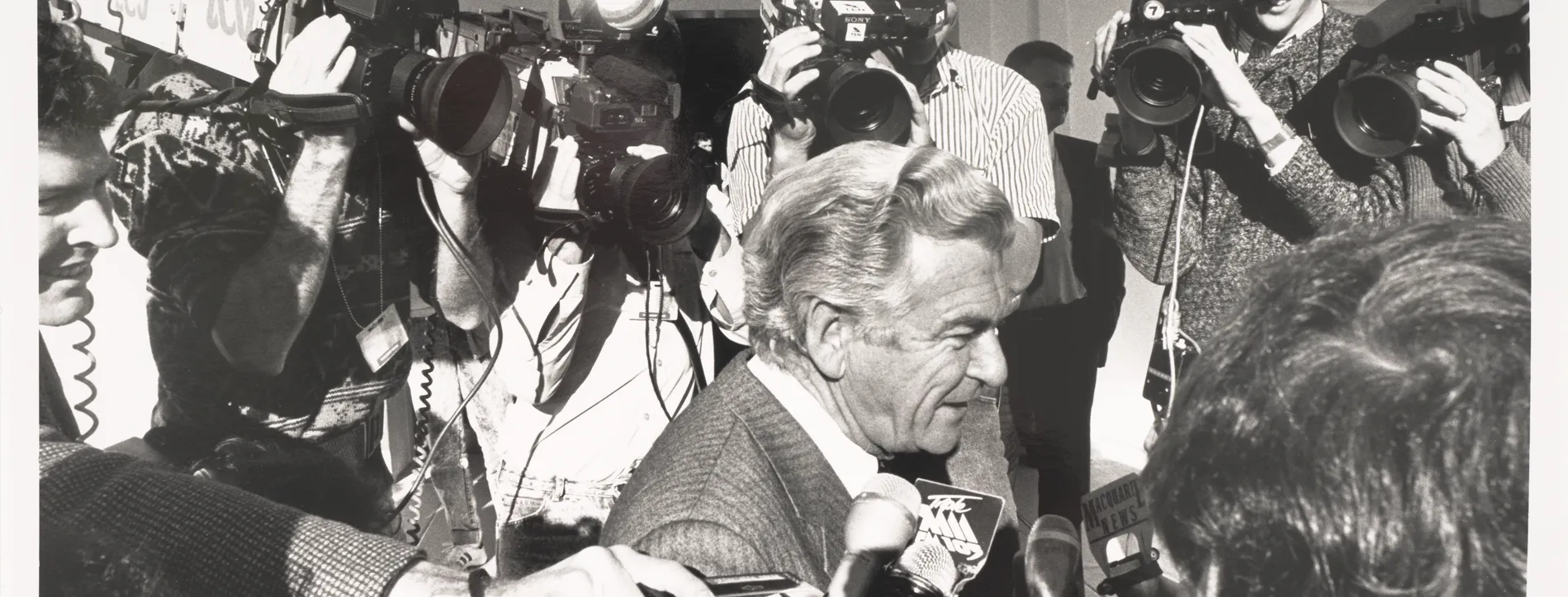
Graeme 'Bluey' Thomson photographic collection
A life's work in photographs.
The Graeme 'Bluey' Thomson collection is over 700 photographs collected by Press Gallery photographer Graeme 'Bluey' Thomson. Thomson worked at Parliament House from the 1970s until 1999 and witnessed important events in Australian political history as well as intriguing moments away from the public eye.
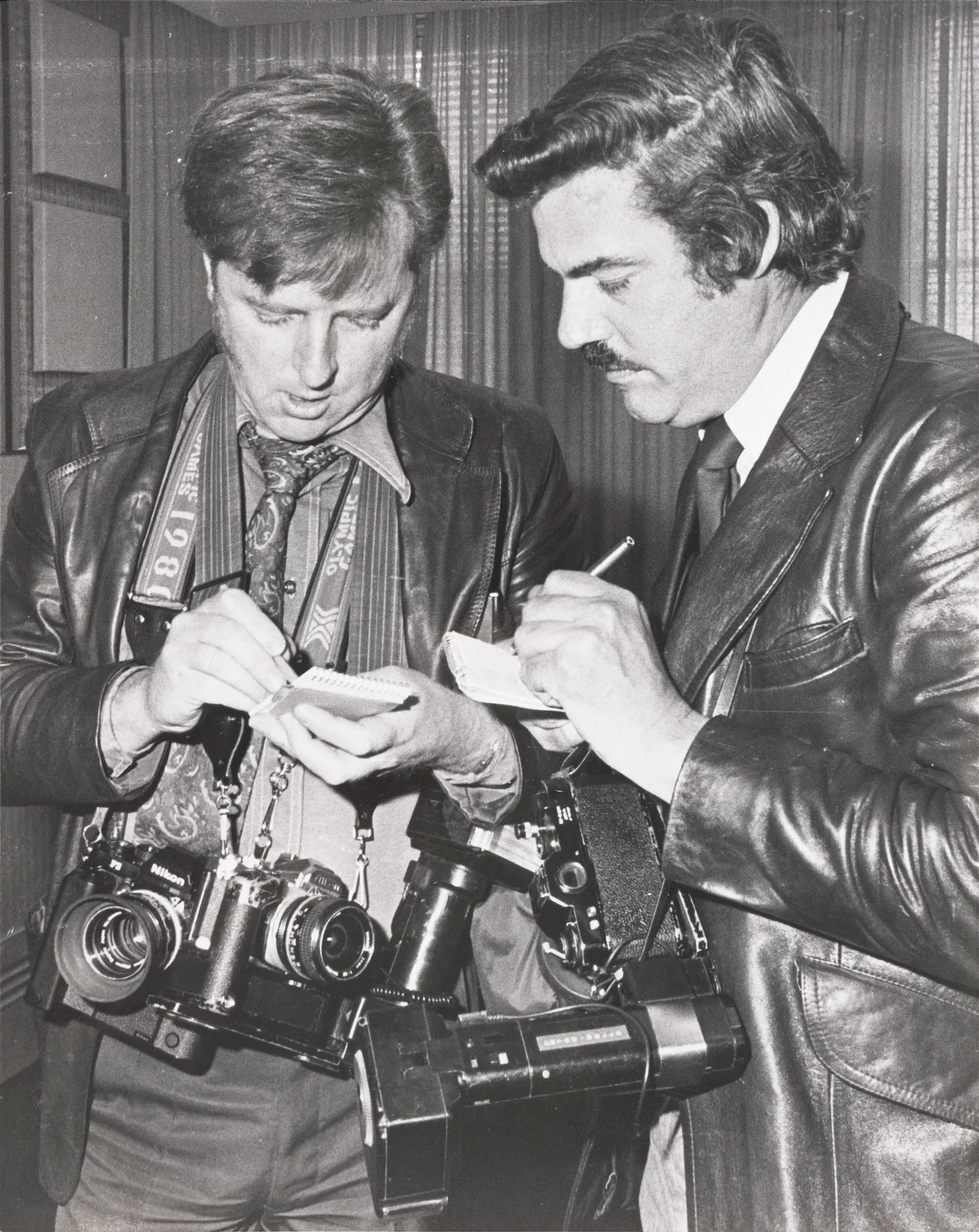
Photographers Graeme 'Bluey' Thomson (L) and Peter Wells (R) compare notes in the Senate Committee Room, Parliament House.
Photographer unknown
The collection includes photographs from across Thomson's career and those he collected from his colleagues. From royal events to political rallies, to one-on-one meetings with world leaders, press photographers were there to capture it all.
Throughout his career, Thomson took thousands of photographs, but he is best remembered for this photograph of Bill Hayden, the former Labor Party leader, playfully curtsying to his successor Bob Hawke after arriving late to a group photograph of Labor Party members. While other photographers were waiting to take the official portrait, Thomson was able to capture a moment of fun.
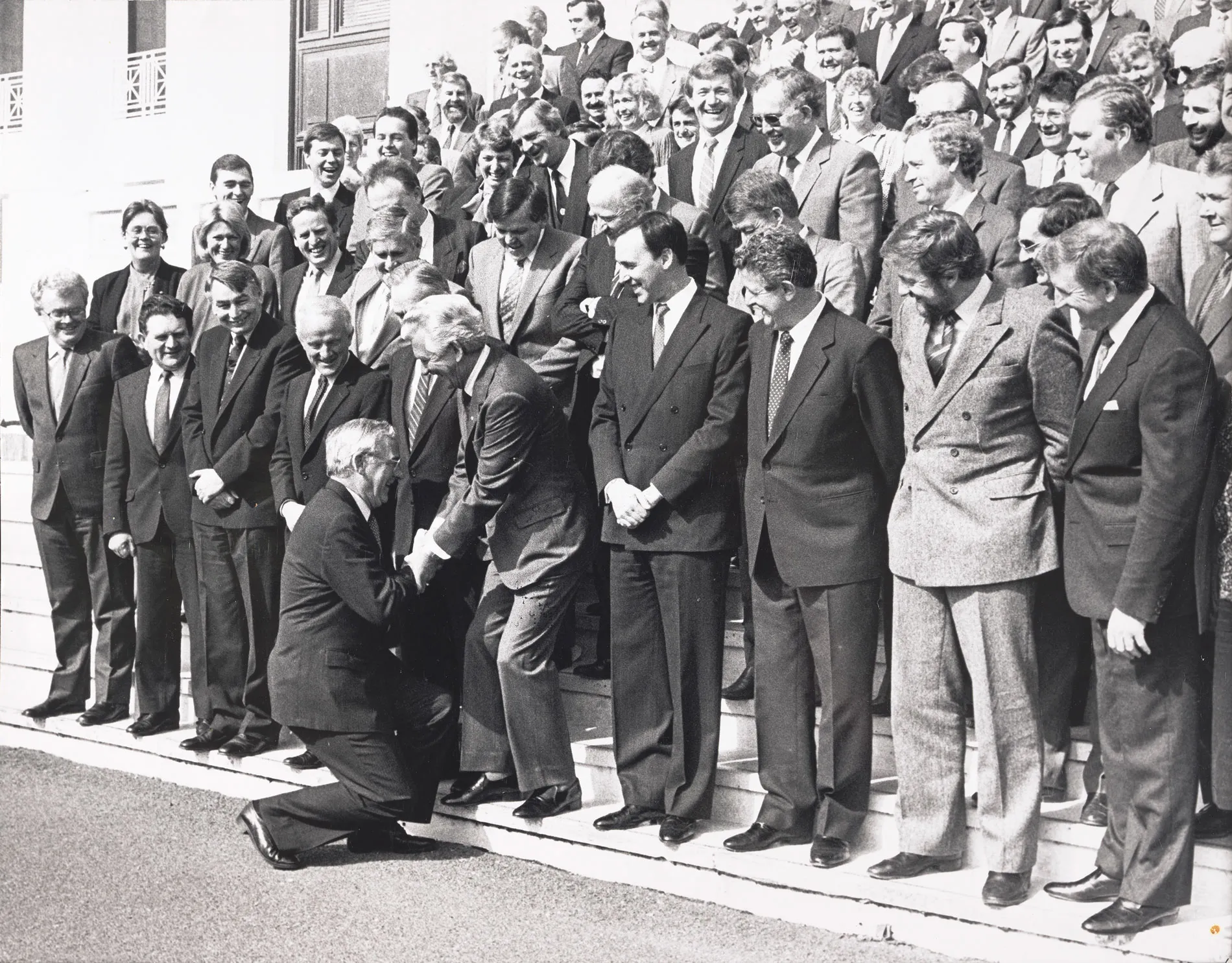
The former leader of the Labor Party Bill Hayden curtsies playfully to his successor Bob Hawke on the front steps of Parliament House, 15 September 1987.
Photograph Graeme Thomson / Newspix
Along with photos of politicians and grand occasions, this collection reveals behind the scenes of the work of a press photographer. The press photographer's role is to take photos, but also to select an image that tells a story. Below is a contact sheet showing a series of photographs taken by Thomson at a Liberal Party event with reference numbers to tell the photographs apart. We can see the final photographs Thomson selected from the ticks he made on the images.
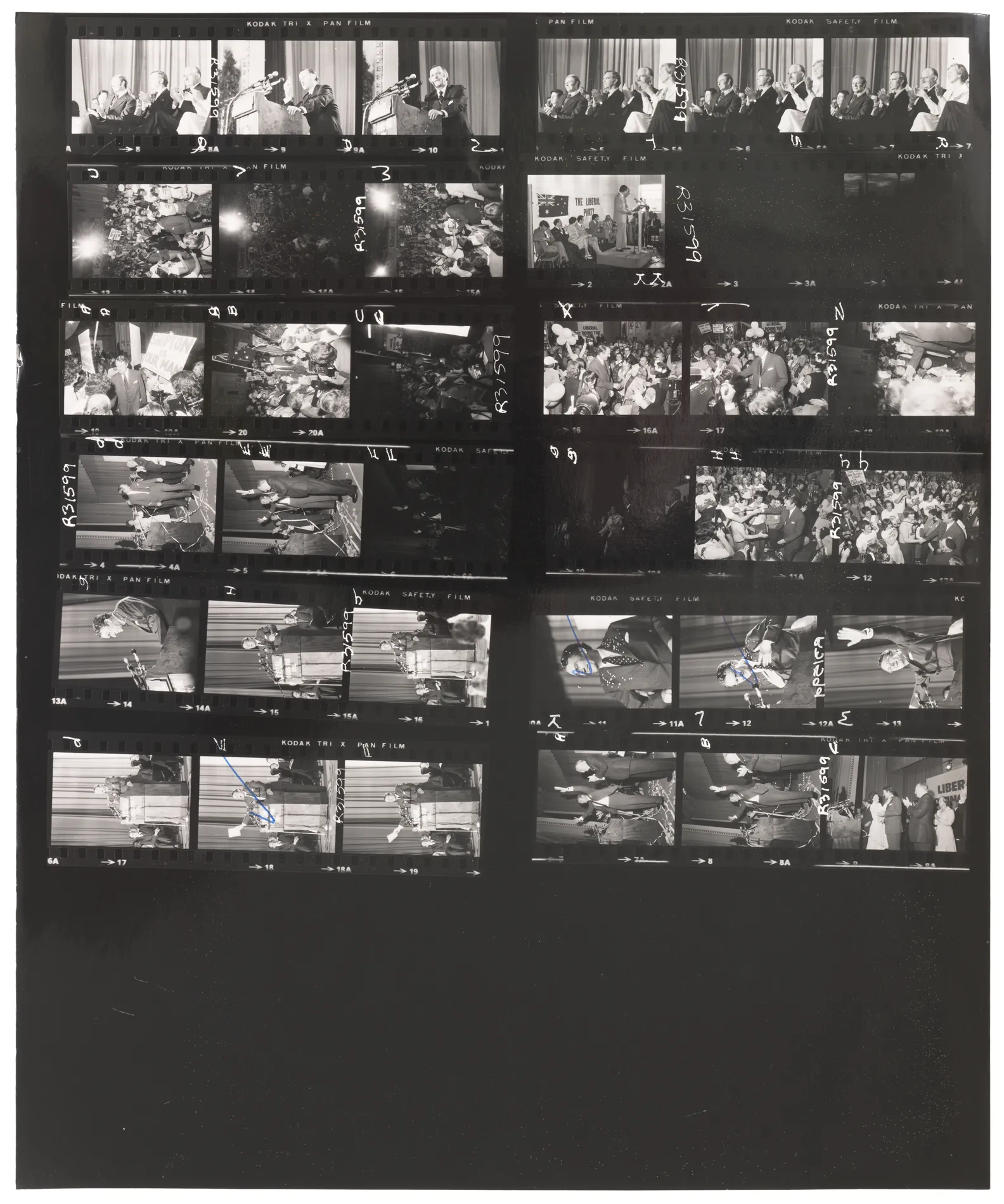
A contact sheet of photographs from a Liberal Party event featuring Malcolm Fraser and Jim Killen.
Photograph Graeme Thomson / Newspix
Thomson's photographs show what life was like in the Press Gallery, in Parliament House, and following the prime minister around the country. These photographs give us insight into the working lives of journalists and allow us to see areas of Old Parliament House that no longer exist.
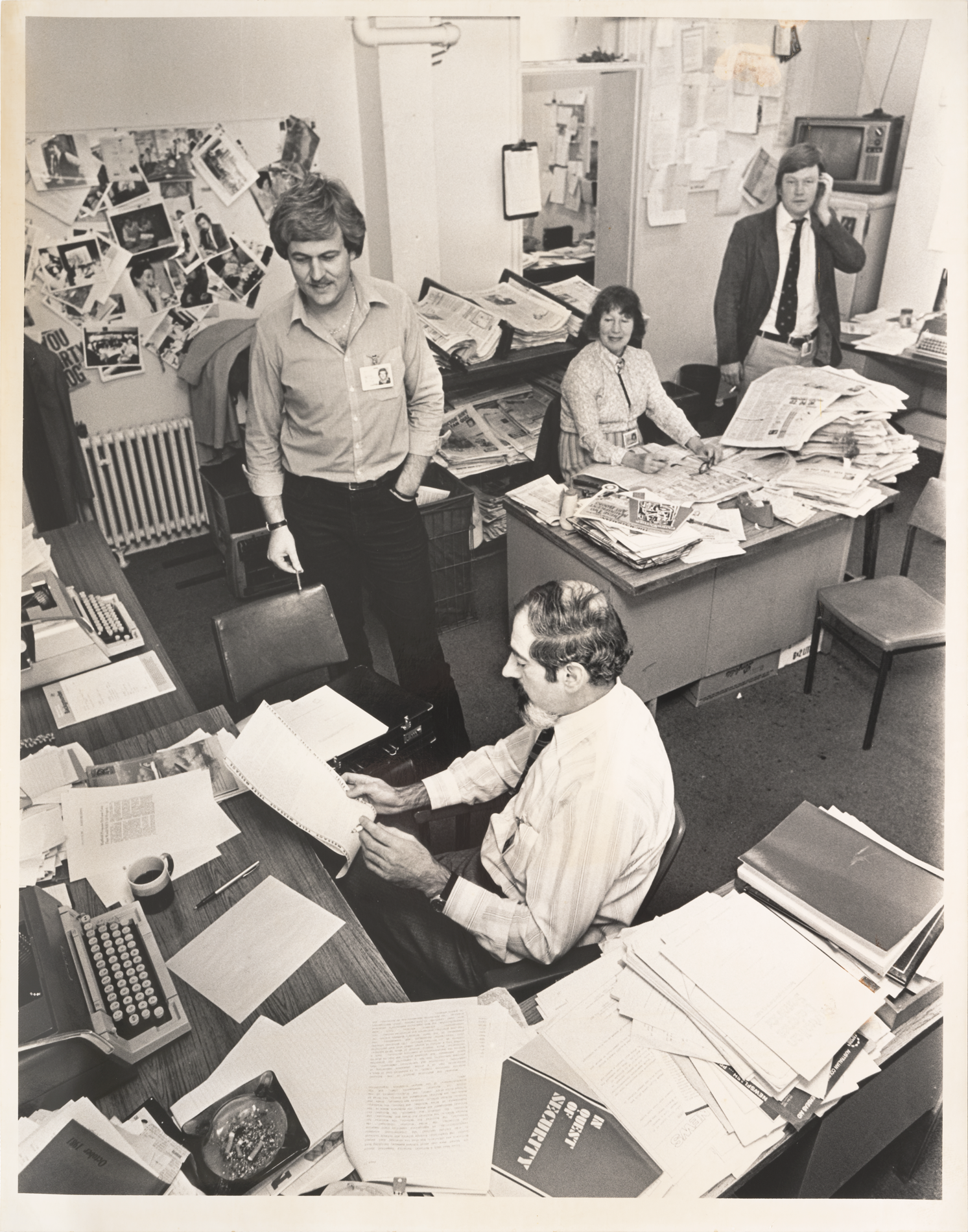
Press Gallery journalists at work in the now-demolished Press Gallery offices. Photographer unknown
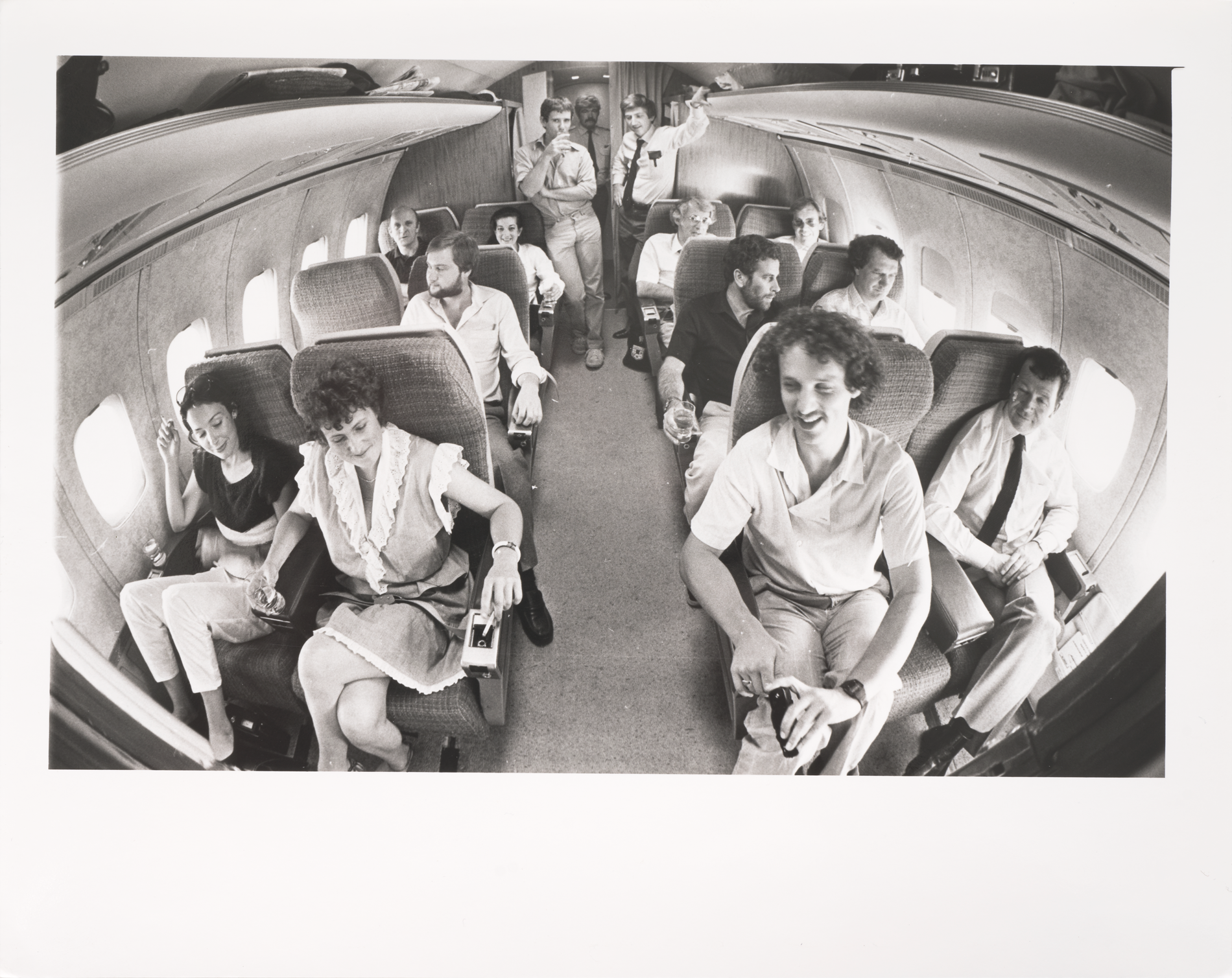
Press Gallery journalists on the prime minister's plane as they accompany Prime Minister Malcolm Fraser to a campaign event, 21 February 1983. Photograph Graeme Thomson / Newspix
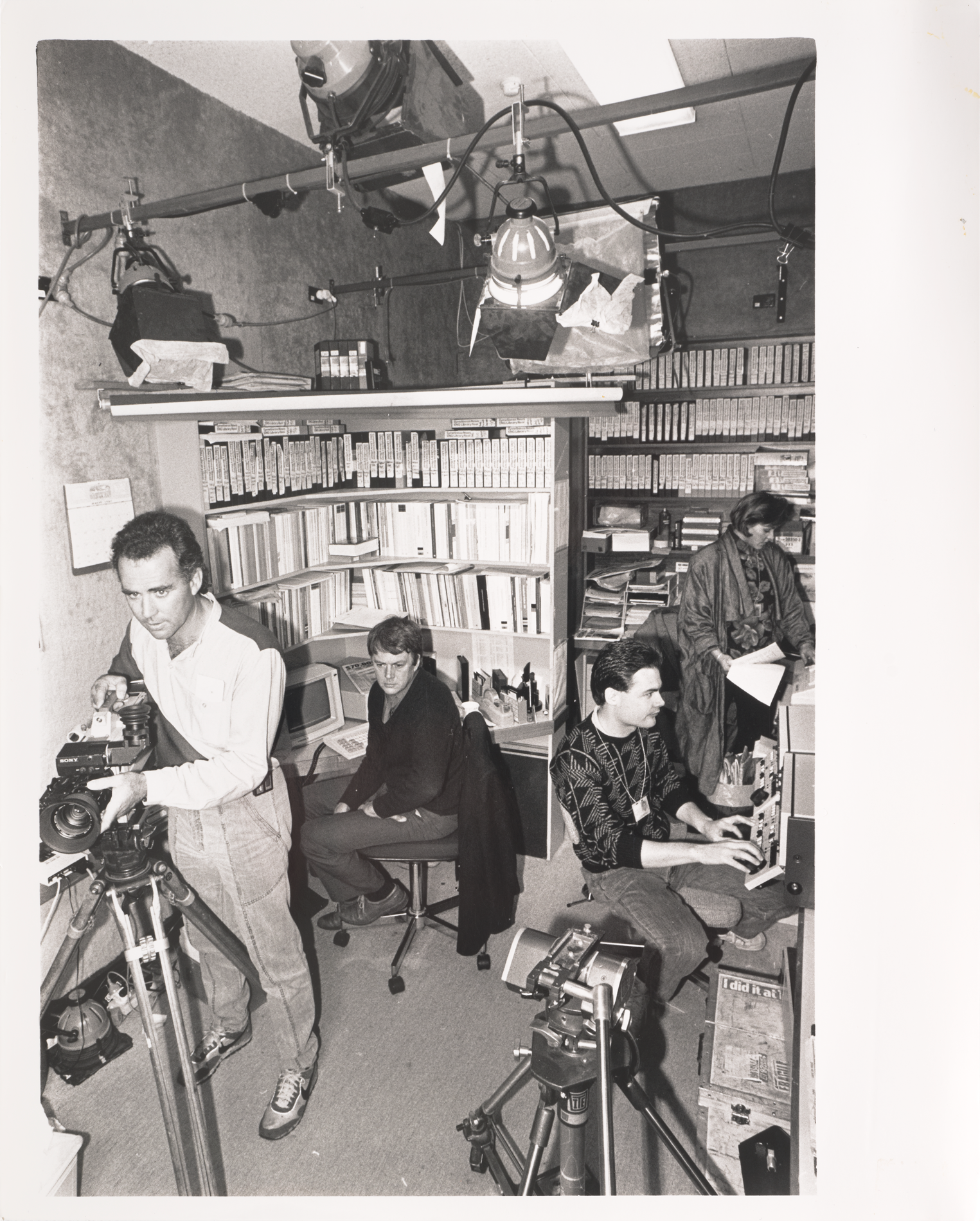
When Parliament House was built no one envisaged television studios in the building. As a result, the television studios of the 1980s were small, crowded and cramped. Photographer unknown
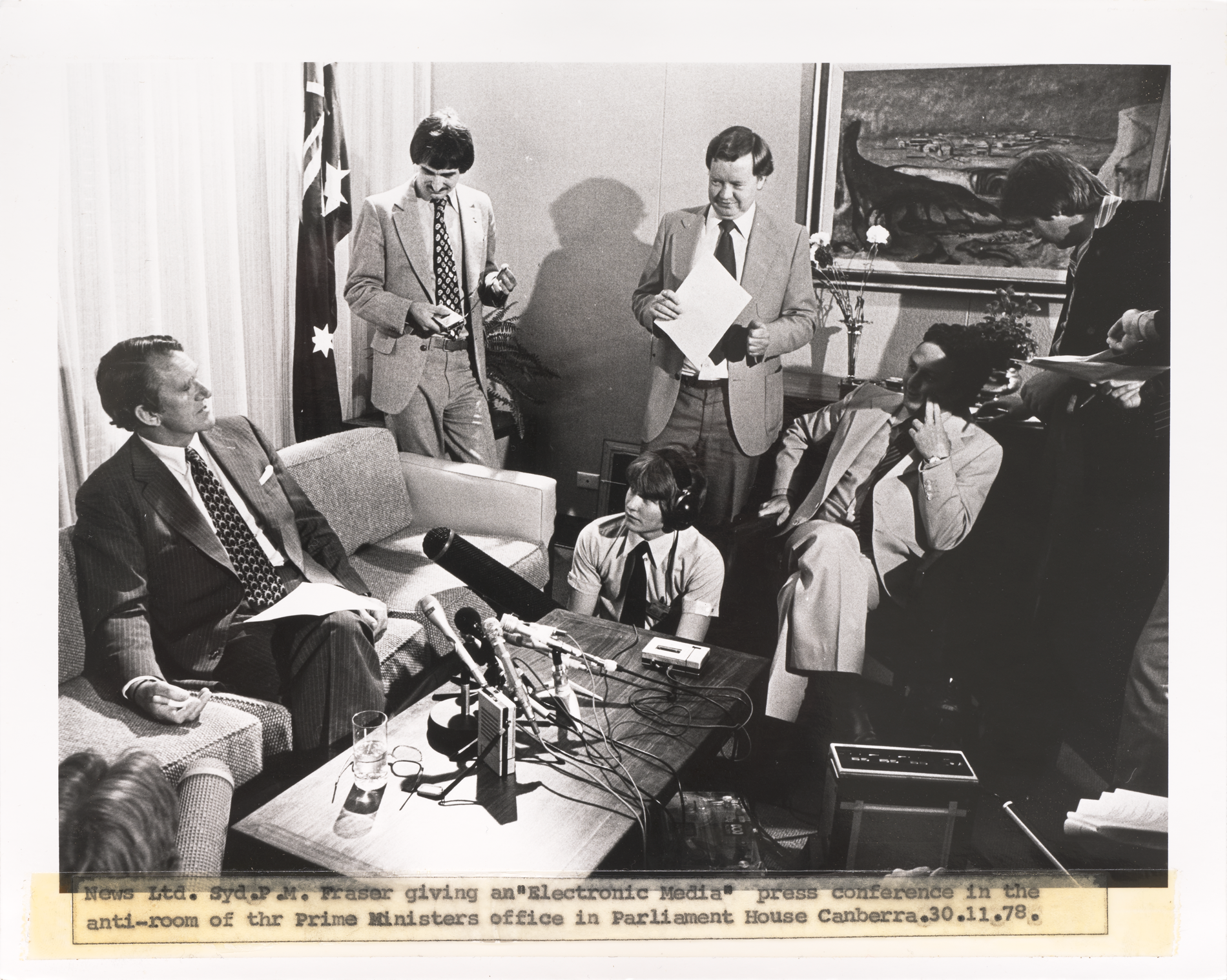
Prime Minister Malcolm Fraser gives an 'Electronic Media' press conference, suggesting print journalists had a separate meeting, 30 November 1978. Photograph Newspix
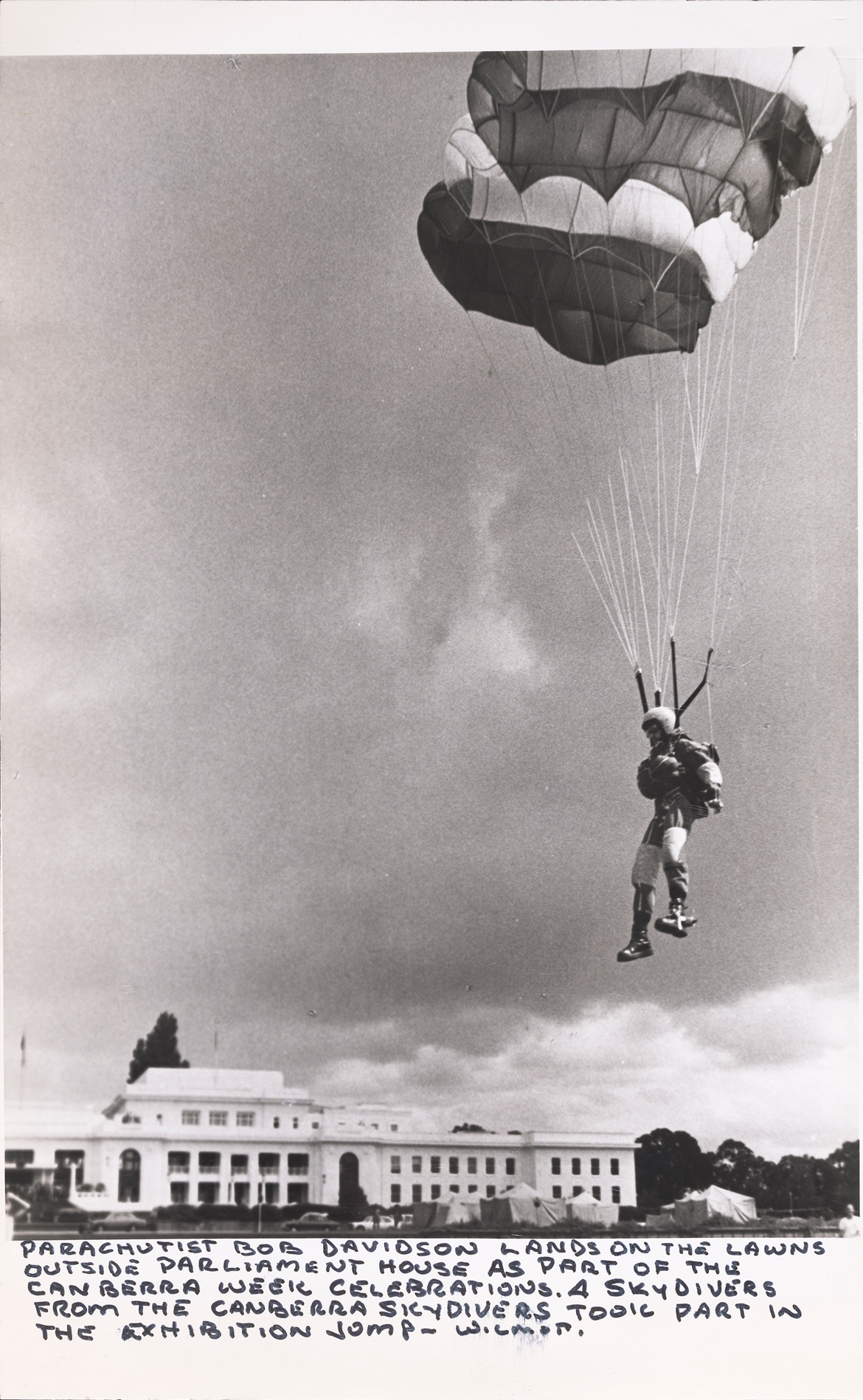
This photograph brings together Thomson's passions in one picture: photography, Parliament House and skydiving. Photograph Maurice Willmott
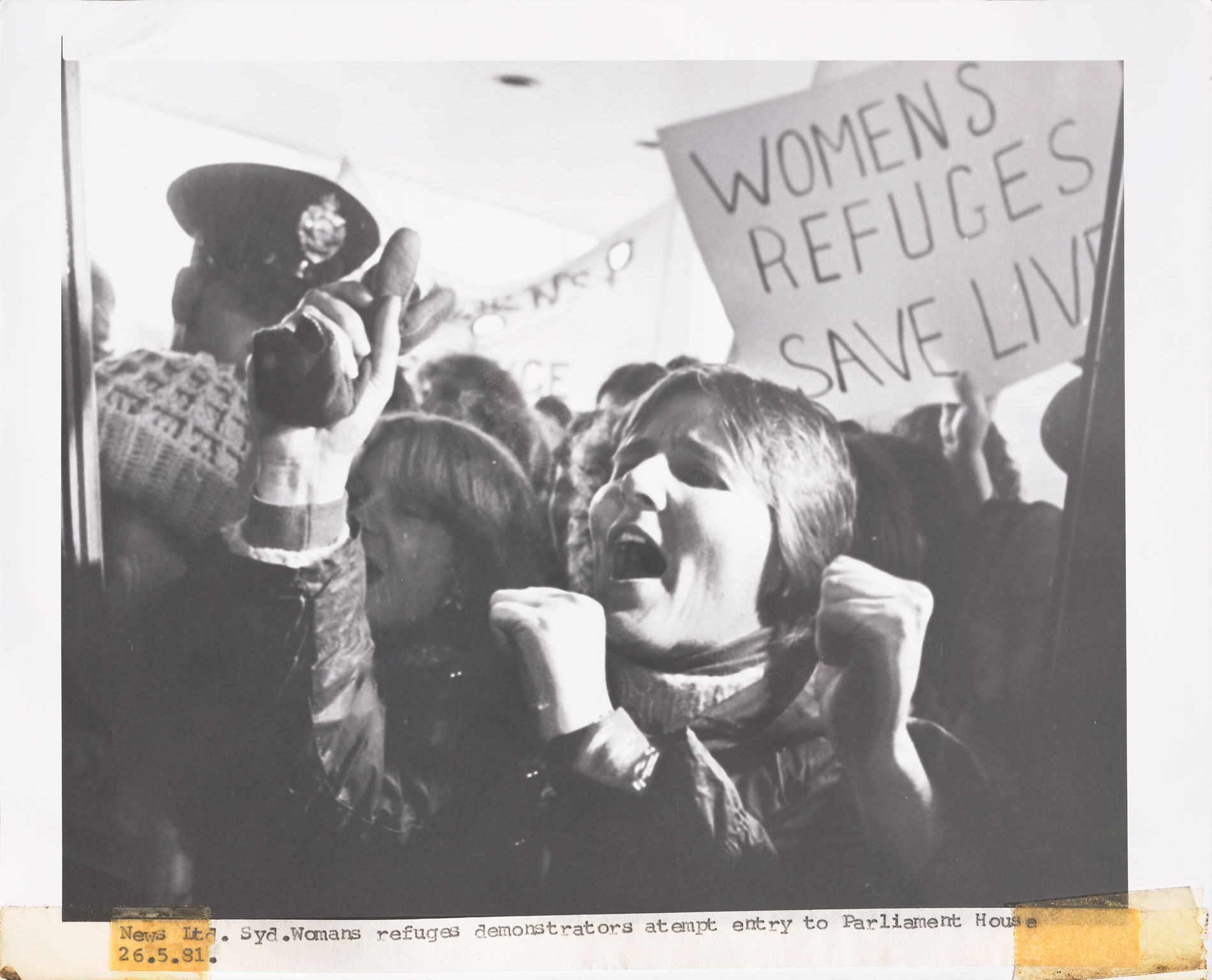
In the middle of the action: this photograph is taken from inside the main doors of Parliament House as protesters attempt to gain entry, 26 May 1981. Photograph Graeme Thomson / Newspix
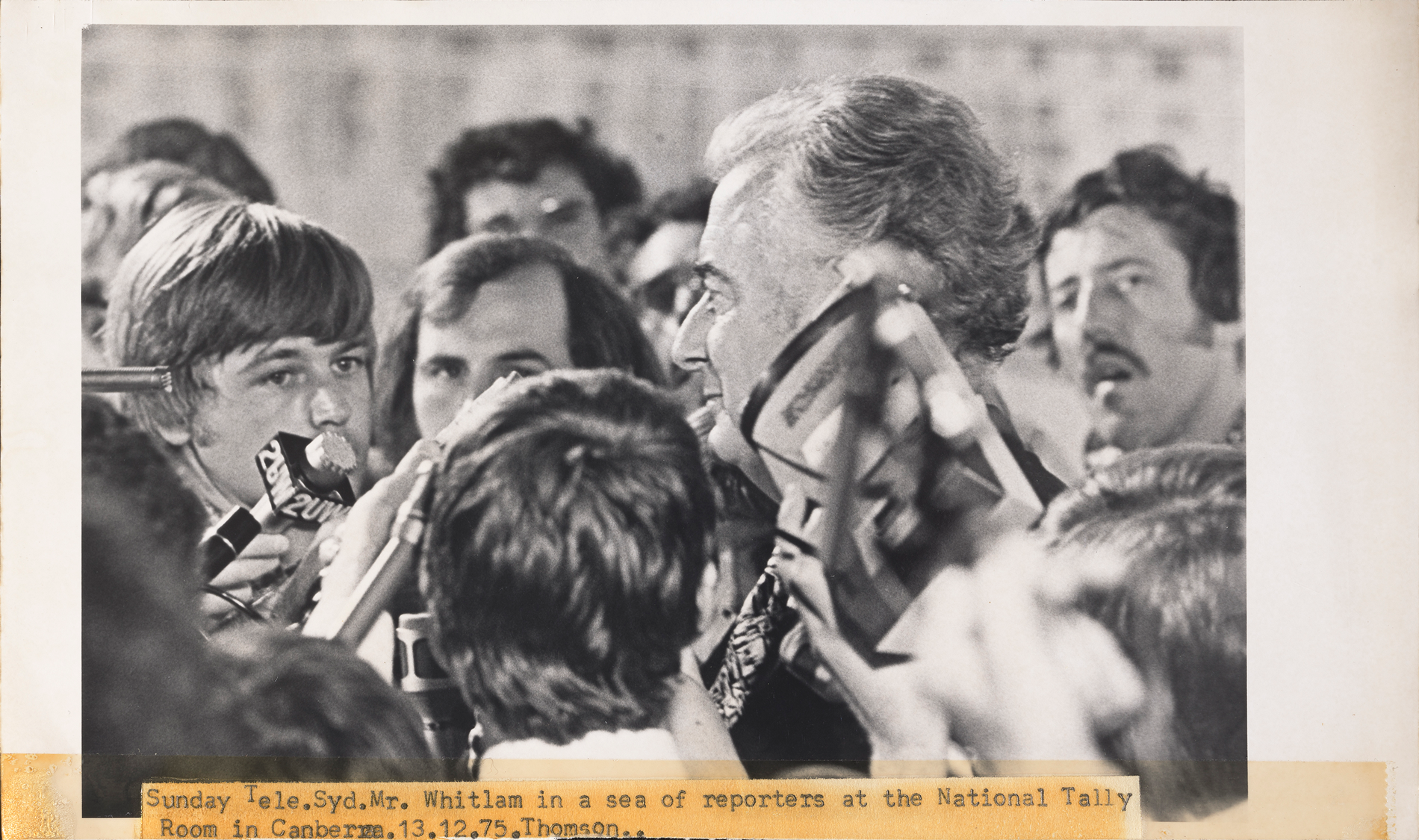
Gough Whitlam swarmed by reporters while visiting the National Tally Room on the night of the 1975 election, a month after being dismissed as prime minister, 13 December 1975. Photograph Graeme Thomson / Newspix
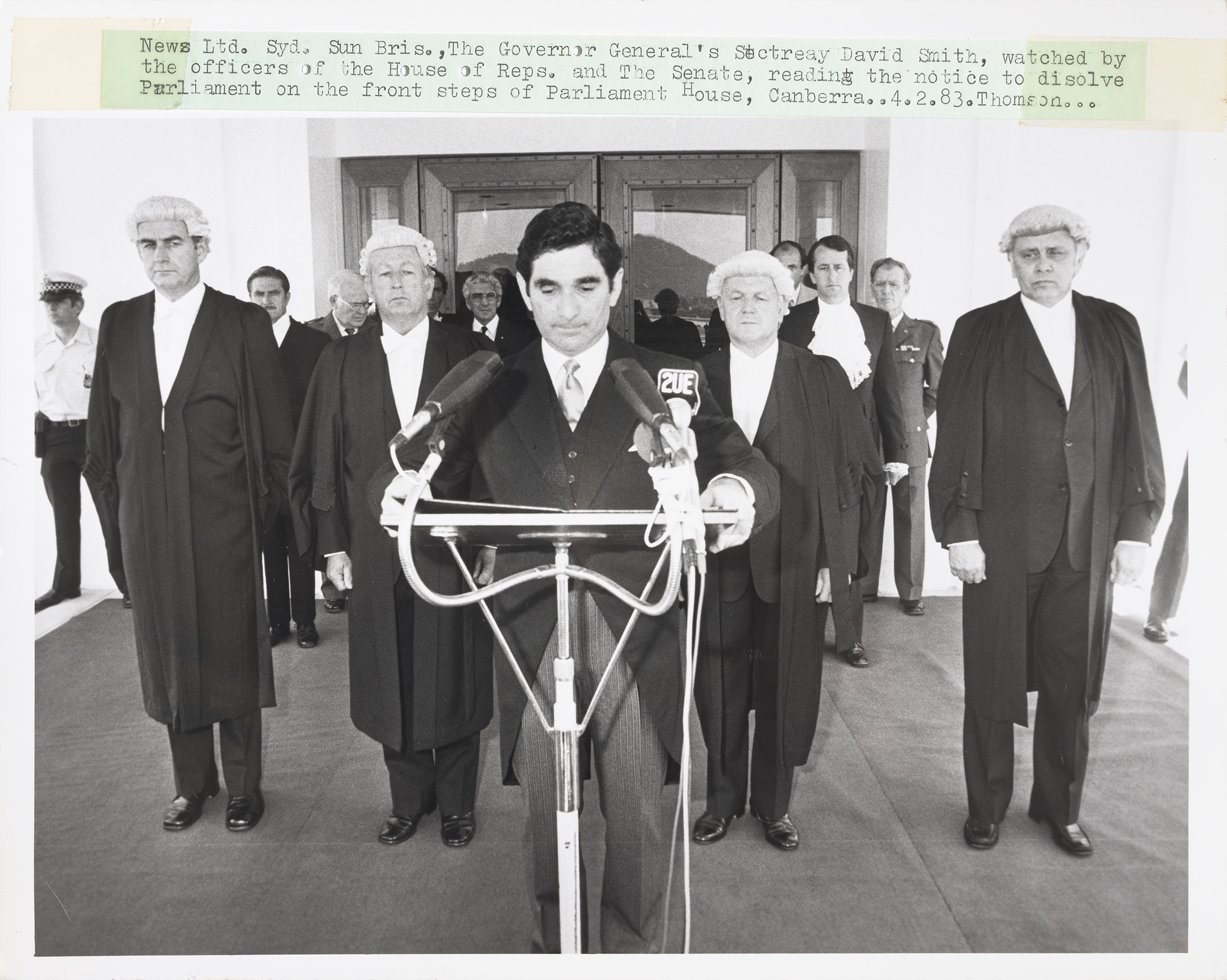
A much calmer scene than 8 years before, David Smith once again reads a proclamation dissolving parliament, 4 February 1983. Photograph Graeme Thomson / Newspix
Where could a press photographer take photographs in Parliament House?
When parliament left Parliament House in 1988 the Press Gallery rules stated: 'Photographers and TV cameramen may take pictures or film on invitation in private rooms but the taking of pictures or film anywhere else in the building is prohibited except with the specific permission of Mr. President and/or Mr. Speaker.' Since then, press photographers have gained the right to photograph in more places in Parliament House. The largest change is the ability for photojournalists to take photographs within the House of Representatives and Senate Chambers.
What is a contact sheet?
A contact sheet is a page of thumbnail photographs printed quickly to assess the composition and exposure of images. This is more cost and time effective than printing all images at full size. They are created by laying the negatives directly on the photographic paper then exposing them so the negatives' perforations and information can be seen.
You may also be interested in...
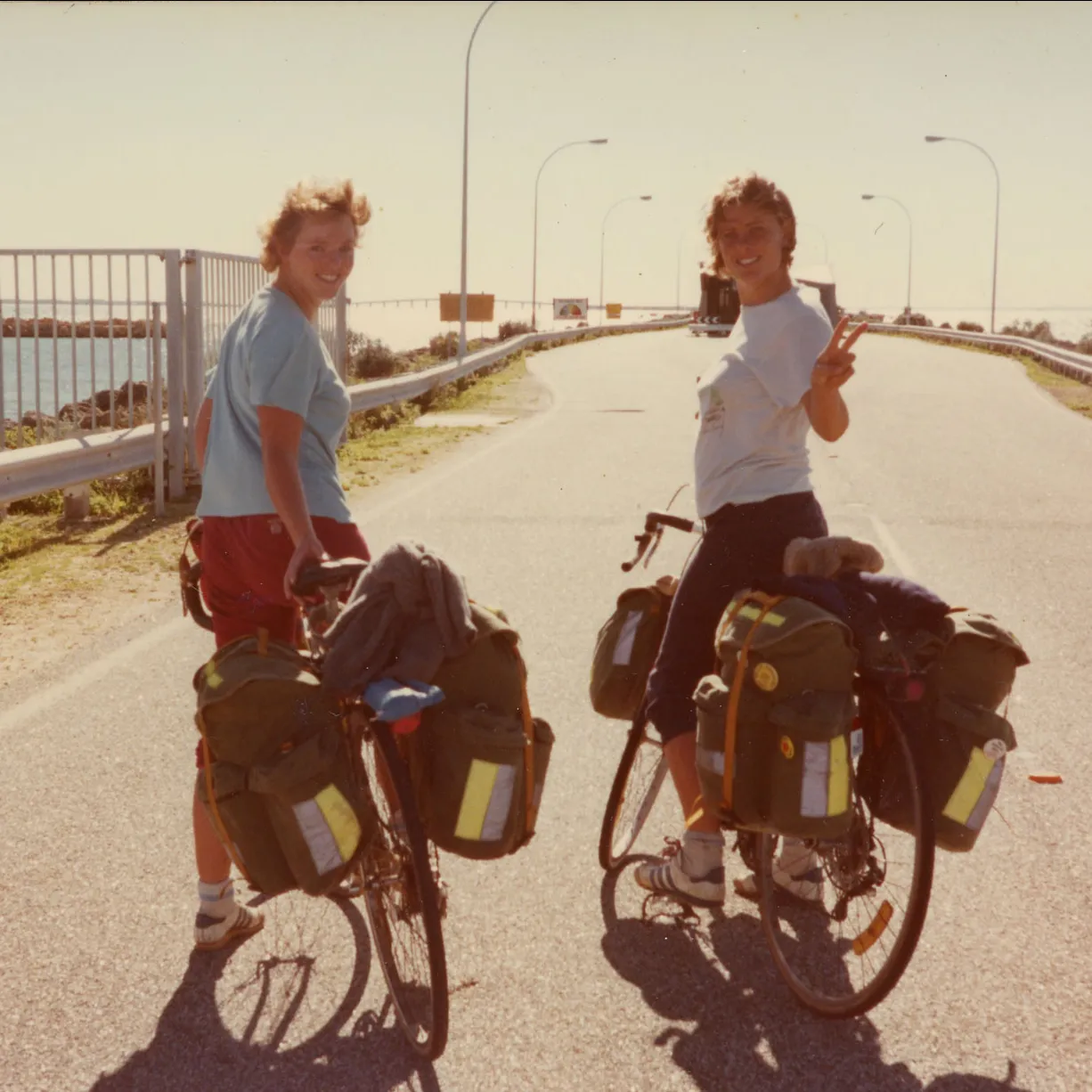
'Bike Ride for Peace' bike seat
How many kilometres would you cover for a cause?
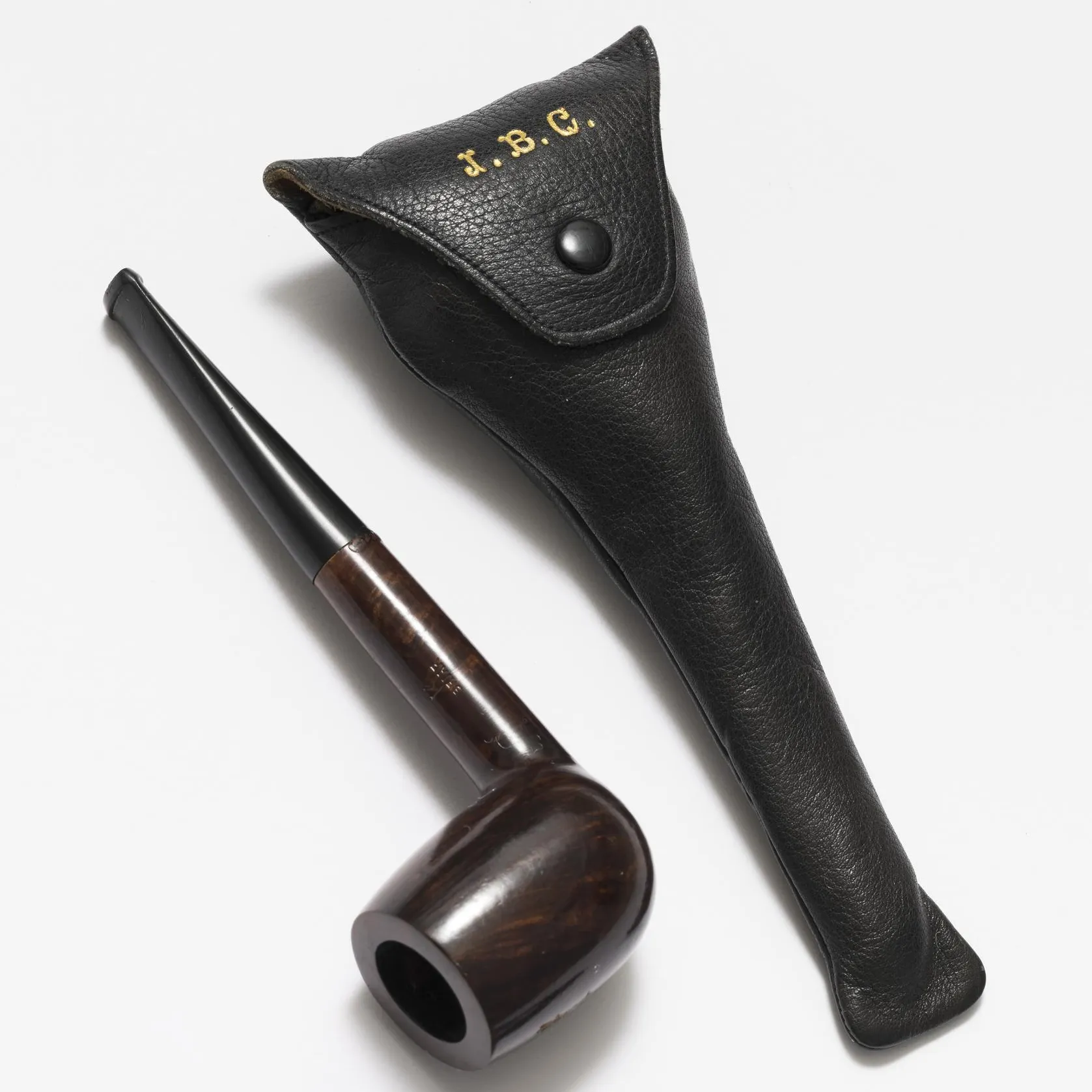
One of Ben Chifley's pipes
A gift from Ben Chifley to his driver.
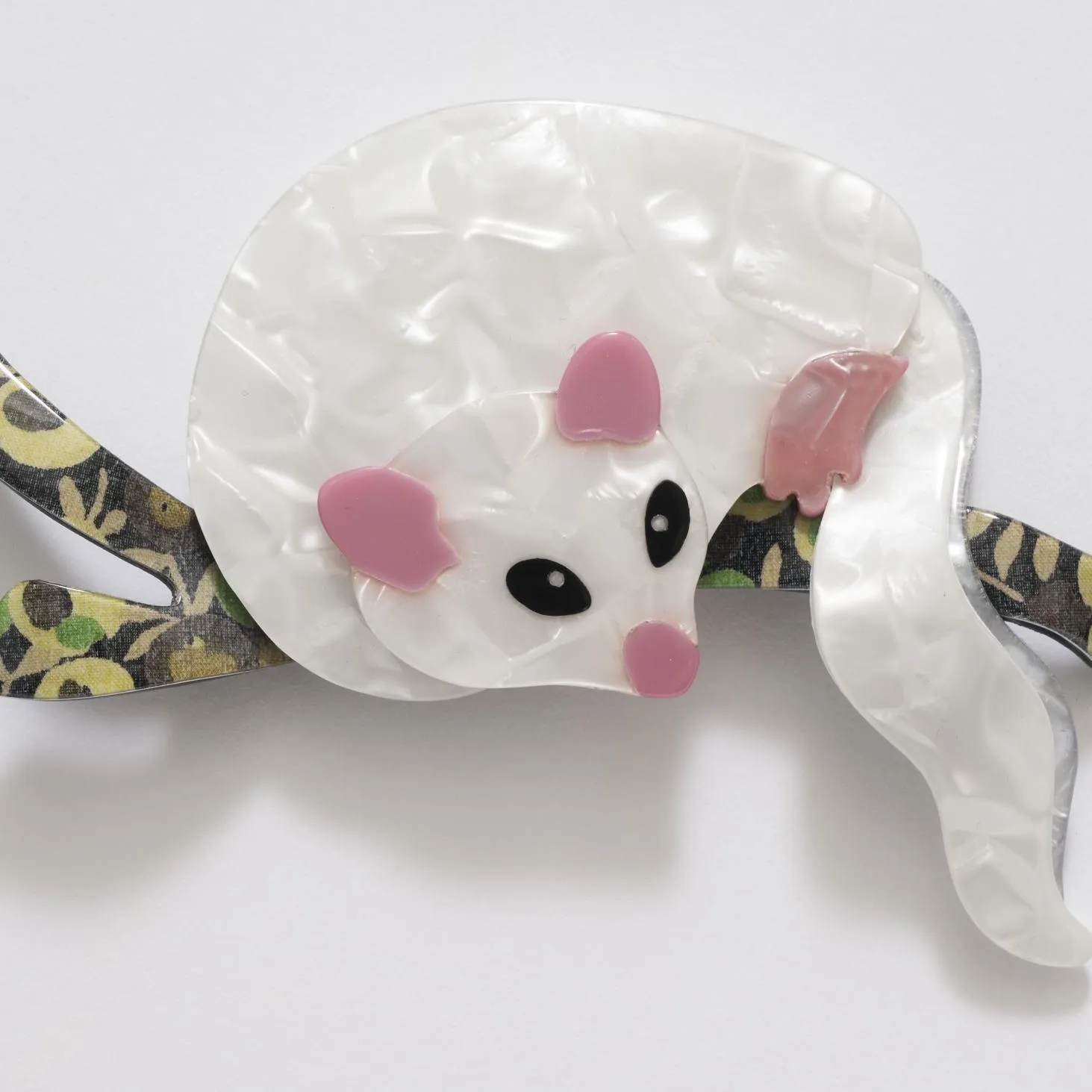
White lemuroid possum brooch
Advocating for endangered species in style.
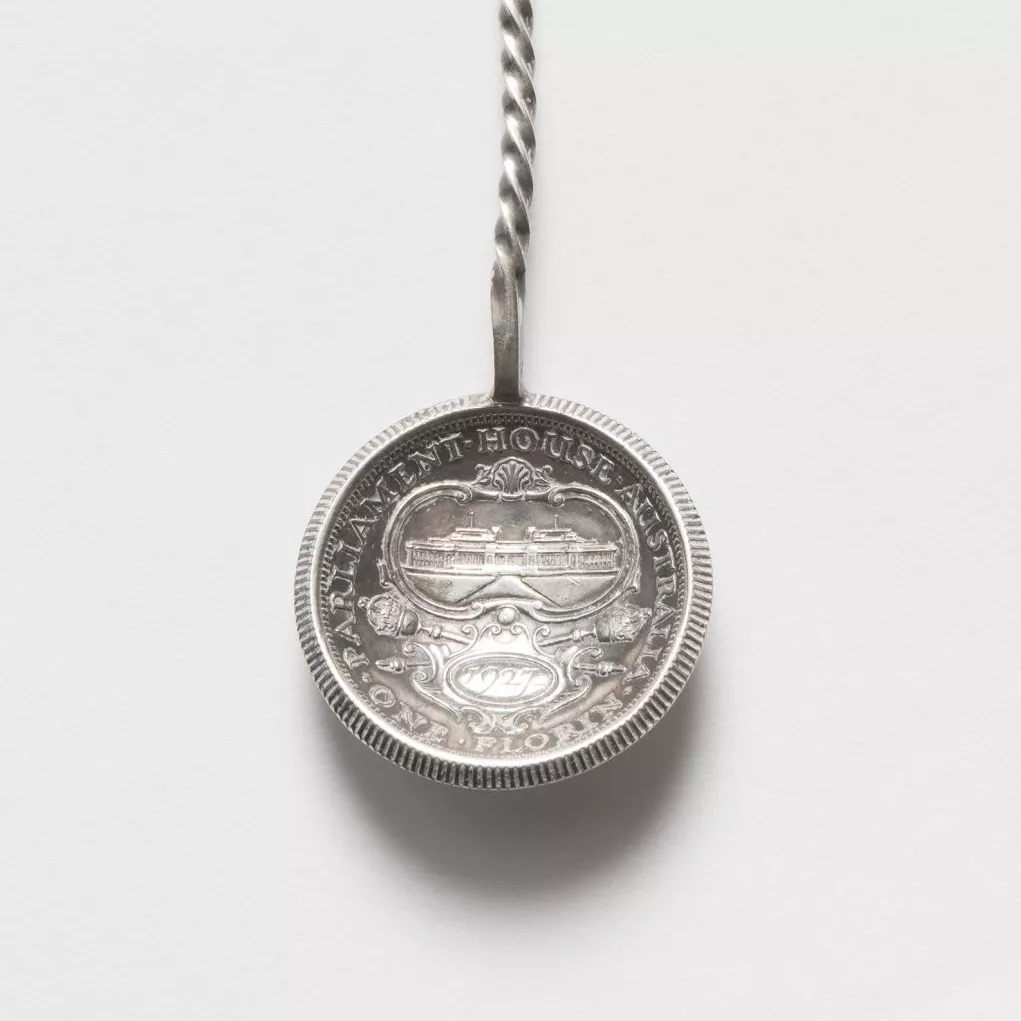
Souvenir spoon with commemorative florin
The first Australian commemorative coin marked the 1927 opening of Australia's provisional Parliament House.
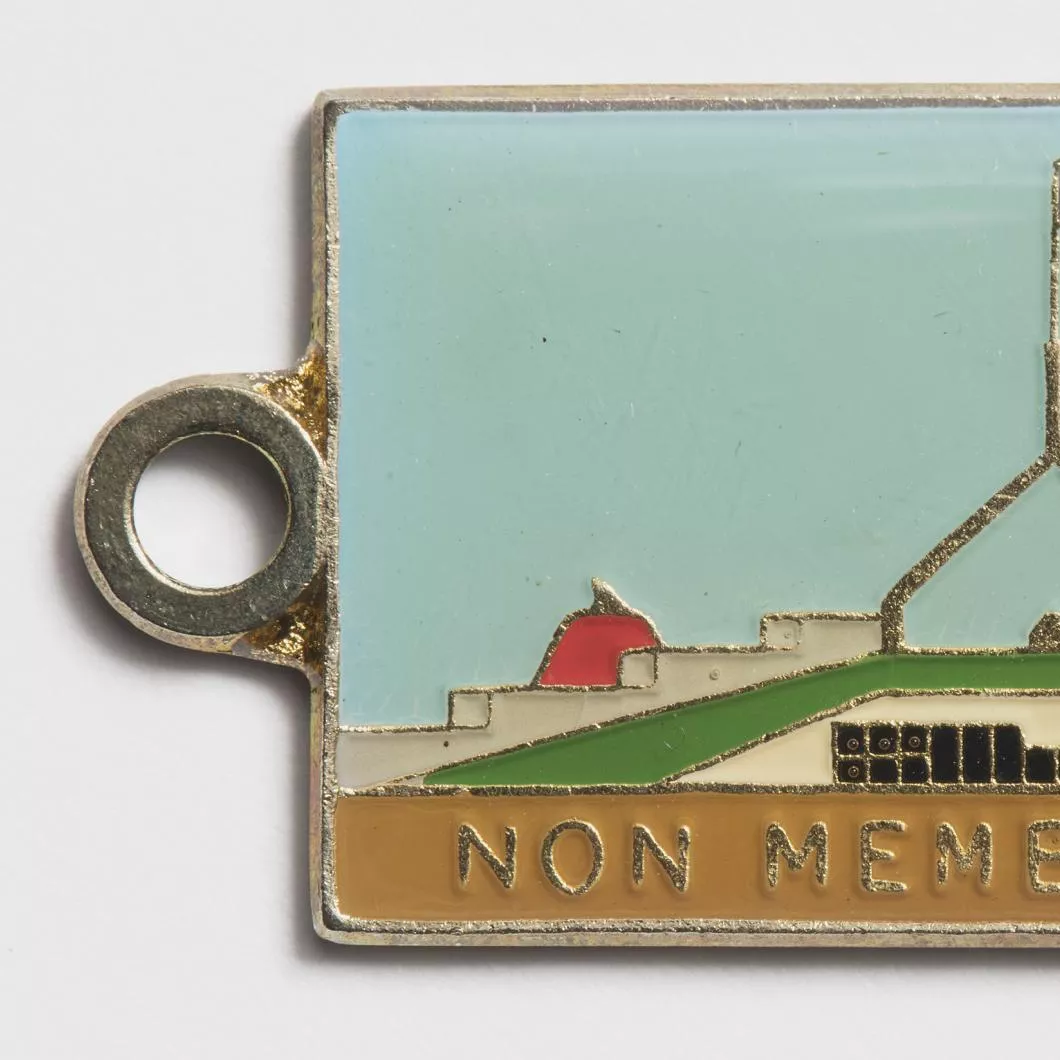
Non-Members’ Bar life membership tags
From 1946, a lively bar was provided for ‘non-members’ of parliament at the provisional Parliament House.
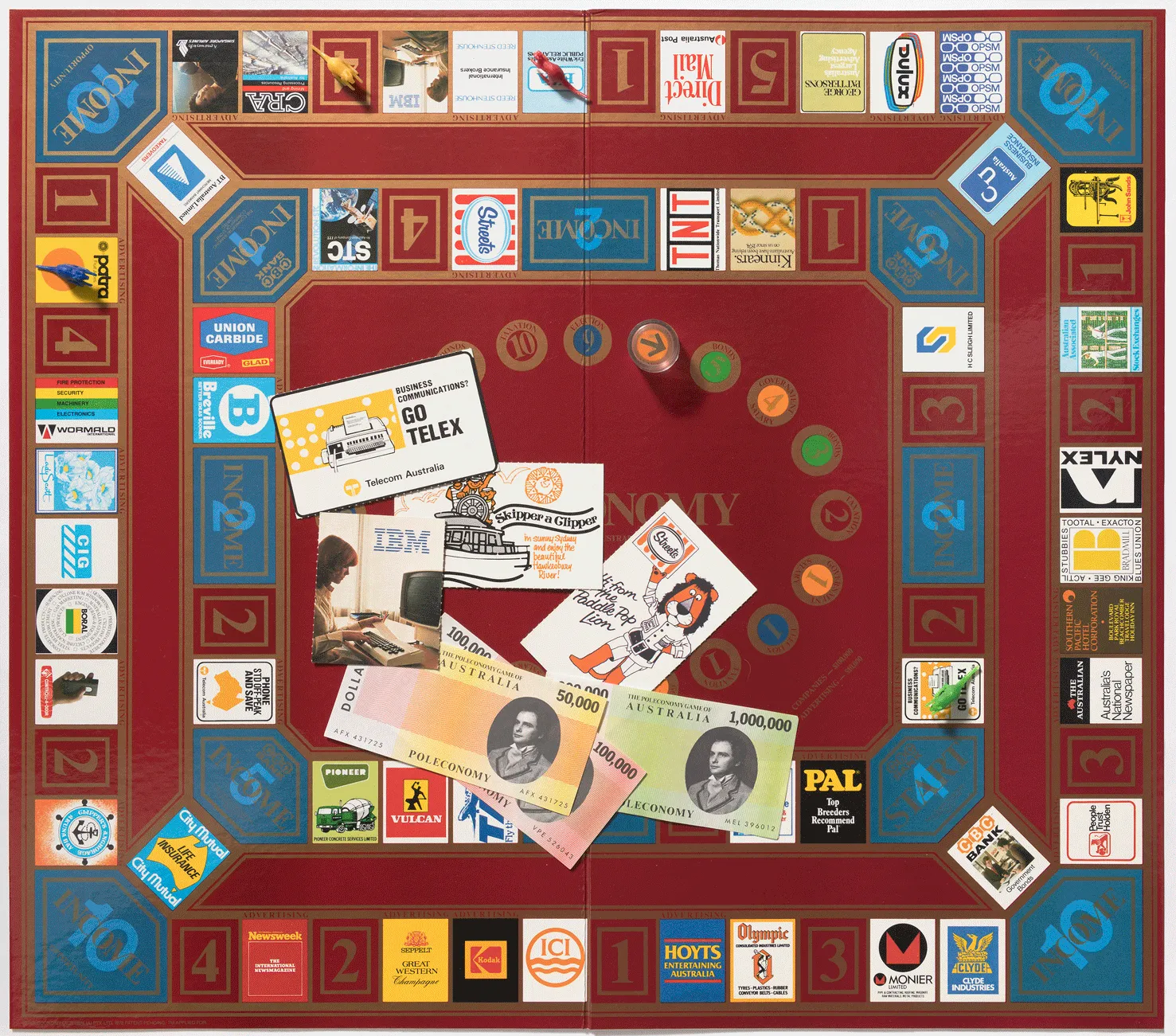
Poleconomy board game
A game of politics and economics.
