


What is a royal commission?
Your guide to royal commissions in Australia.
In Australia, a royal commission is the highest form of public inquiry into a matter of serious public significance.
Why do we have royal commissions?
Royal commissions are called in rare and exceptional circumstances. They are an important instrument in democracy due to their independent, open processes and flexibility to be specifically framed to investigate a matter of public importance.
Royal commissions are created under legislation that confers on them specific powers of investigation not often available to other types of inquiries. These wide-ranging information-gathering powers include the right of entry and surveillance, and the power to summon and cross-examine witnesses under oath. While royal commissions may have some similarities to courts, and are often held with retired judges as the arbiters, they are not courts and follow different rules and processes. Importantly, witnesses who give evidence before a royal commission are not necessarily protected if they confess to crimes.
Royal commissions make findings, but they are not judicial; they bring down no verdicts. However, they can refer matters to the police.
To head a royal commission, the government appoints one or more royal commissioners who are usually experts in the law – often a retired judge. Royal commissions are sometimes informally referred to by the name of the commissioner. For example, the Royal Commission into the Building and Construction Industry (2001-2003) led by Justice Cole was called the 'Cole Commission', although its formal name was used in official documents.
Royal commissions usually fall into one of two categories: investigative or advisory, although they can be both.
Investigative royal commissions
Investigative royal commissions seek to uncover the truth about something.
The Royal Commission into Misconduct in the Banking, Superannuation and Financial Services Industry established in December 2017 is an example of an investigative royal commission. As the name suggests, it was created to investigate misconduct in the financial sector. The royal commission was held throughout 2018, with the final report submitted in 2019.
The report from a royal commission contains its findings and recommendations for change. The report is initially sent by the royal commissioner to the governor-general and then tabled in parliament. In the above royal commission, Royal Commissioner Kenneth Hayne submitted the report to Governor-General Sir Peter Cosgrove on 1 February 2019. The final report was tabled in parliament three days later. Following the royal commission, sweeping reforms and new laws regulating the financial sector were introduced.
Advisory royal commissions
Advisory royal commissions seek to assist in developing government policy.
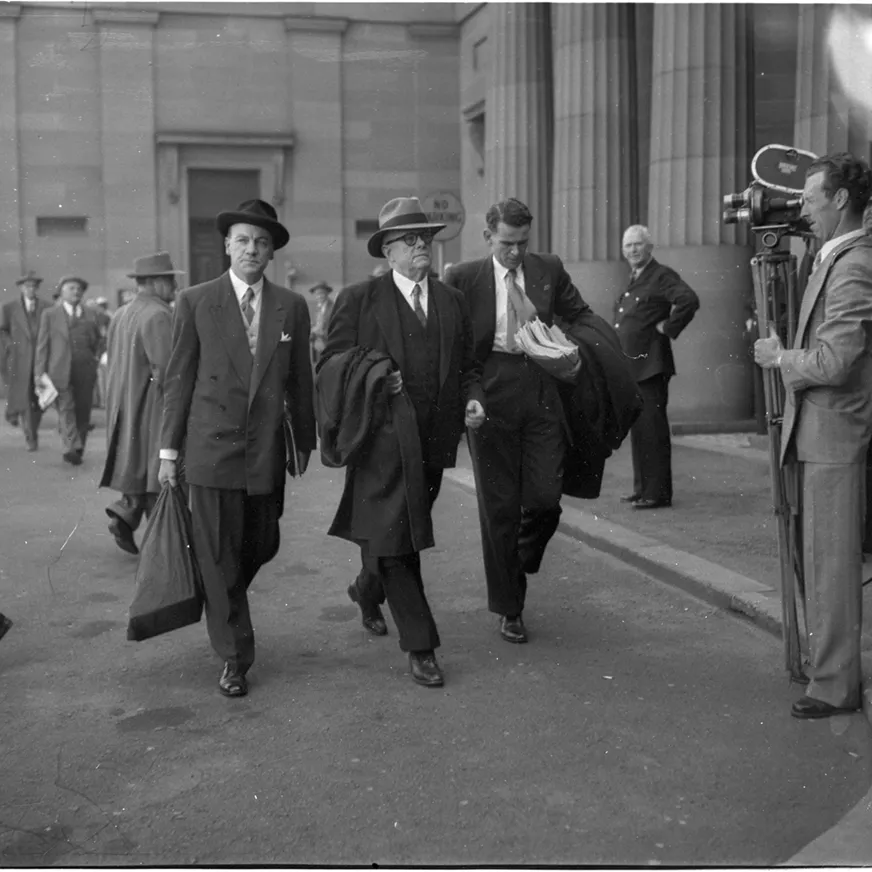
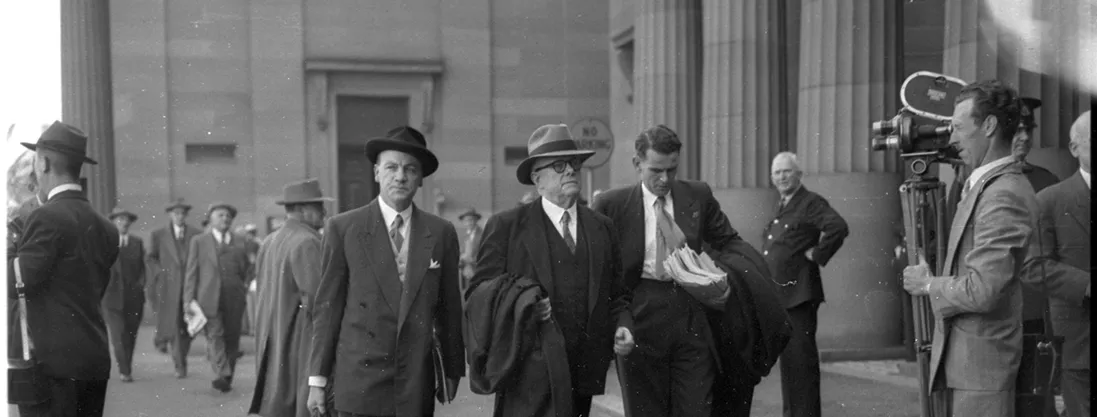
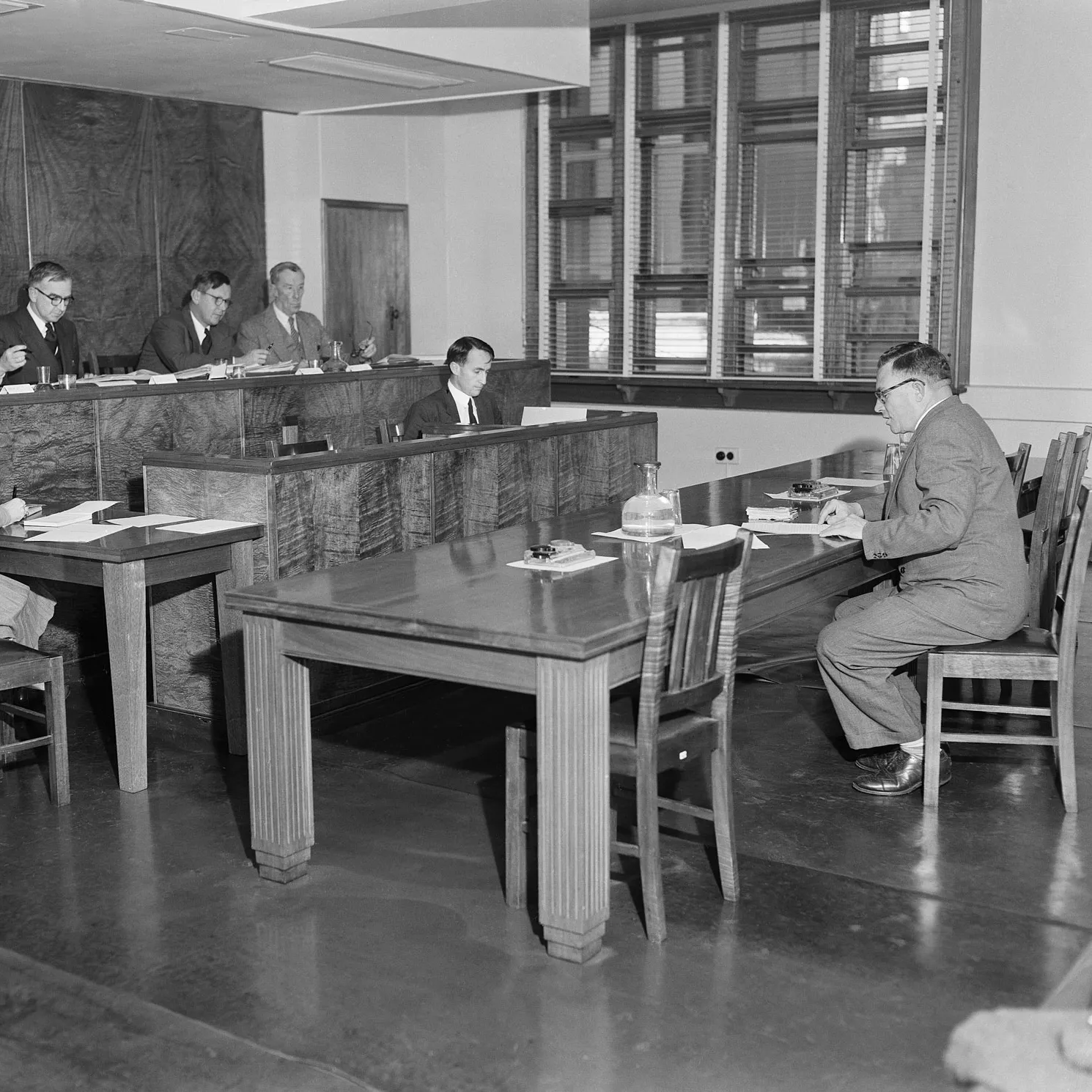
An example of an advisory royal commission is the Royal Commission on Television held from 1953 to 1954. Australia didn't have television at the time, and the Menzies government didn't have a definite policy on it. The royal commission was established to report on the number of commercial television stations that would be appropriate, and the standards required in programming, especially regarding controversial and religious issues.
Royal commissions allow for input from the public through written submissions and presentation at hearings. The Royal Commission on Television received submissions from a range of individuals and organisations, including religious groups opposed to the introduction of television and people in media businesses who supported its introduction. Farmers, women's groups, cultural organisations, trade unions, academics, and the ABC board also made submissions.
The Royal Commission on Television recommended television should be introduced with commercial and public stations, and that there should be government regulation over the number of stations that could be owned by a company. The report was tabled in the House of Representatives in September 1954. It gave Menzies the basis for a clearer policy and television began in Australian two years later, in time for the 1956 Olympic Games in Melbourne. During the 1958 federal election, television was used for the first time for campaigning and to announce election results.
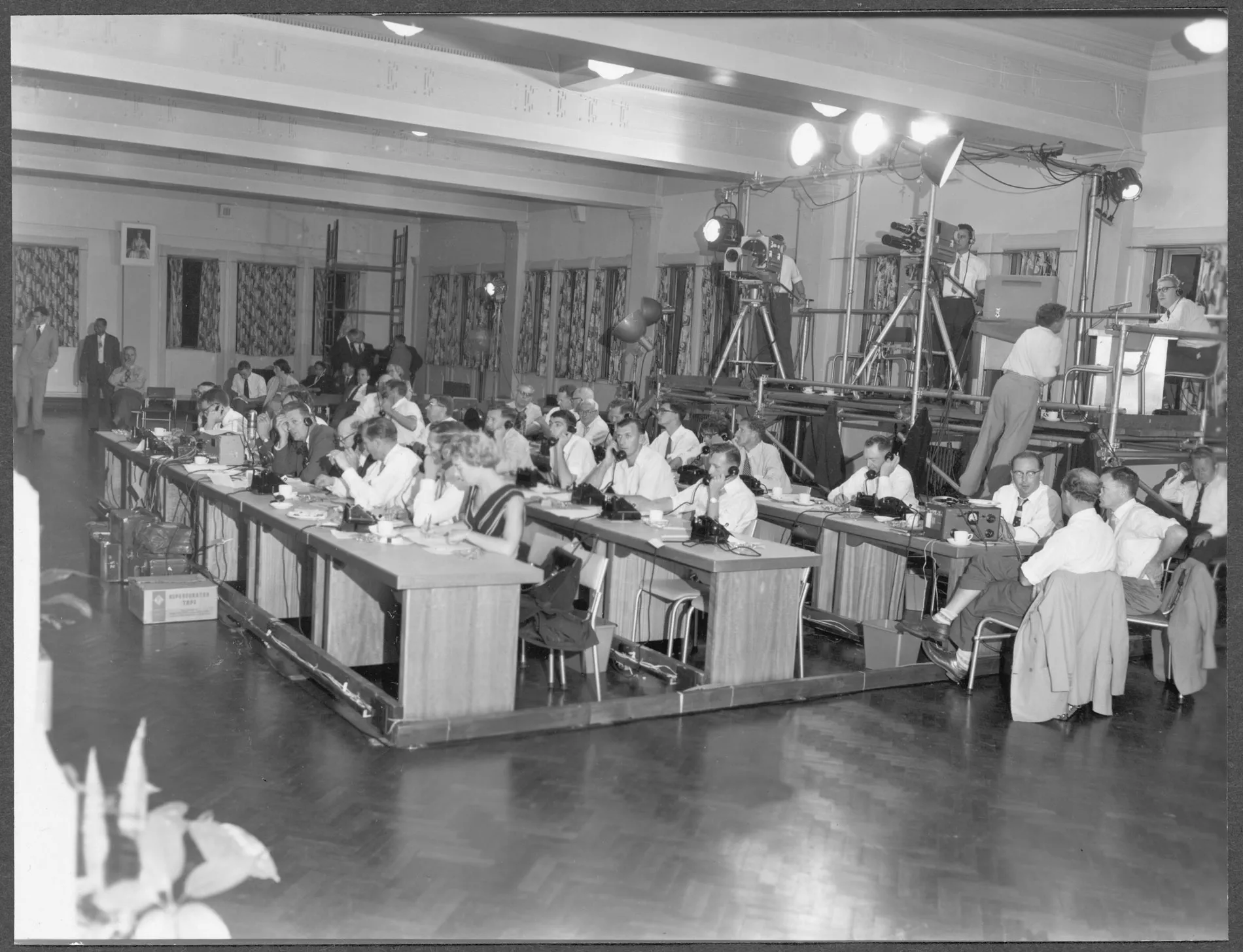
The tally room at the Commonwealth Bank building in Sydney where television, radio and newspaper reporters record results of the federal election, November 1958.
Photograph NAA: A1200, L29504
Who can establish a royal commission?
The governor-general has the power to establish a royal commission on the advice of government ministers. The governor-general issues 'letters patent', which is a formal document that includes the scope of the inquiry, the appointed commissioner or commissioners, and the reporting date or dates.
A royal commission can be called by federal or state governments, and sometimes both. An example is the Royal Commission into Aboriginal Deaths in Custody (1987-1991), which was supported by all state and territory governments.
Who pays for a royal commission?
Royal commissions are funded by the government and although they are temporary bodies, they can last for many years and be very costly to the taxpayer. For instance, the Royal Commission into the Robodebt Scheme (2022-2023), which was established to investigate the Robodebt scheme, had a budgeted cost of $30 million.
How frequent are royal commissions?
Governments are usually sparing in their use of royal commissions in large part because they are so expensive, and they are considered a 'last resort'.
Australia's first Commonwealth royal commission was held in 1902 to investigate the mistreatment of troops returning from service in South Africa in the SS Drayton Grange. It found that there had been serious overcrowding, lack of discipline and a measles epidemic on the voyage.
Between 1910 and 1929 there were 54 royal commissions – just under three per year on average. During the Whitlam government's three years in power, 13 royal commissions were established, including one into 'human relationships' in 1974 and another on 'transport to and from Tasmania' also in 1974. More recently, royal commissions have averaged about one per year.
Why are they called 'royal' commissions?
In formal terms they're 'royal' because of the letters patent issued from the Crown, represented by the governor-general. In 2009, the Australian Law Reform Commission found that the 'royal' should remain 'for reasons of status and perceptions of independence'.
What legislation governs royal commissions?
For the Commonwealth, the legislation governing royal commissions is the Royal Commissions Act 1902, one of the earliest pieces of legislation passed by the parliament of newly federated Australia. This legislation allows the federal government the power to establish a royal commission. State royal commissions are governed by specific legislation in each state and territory.
You may also be interested in...
1999: Republic referendum
In 1999 Australia voted no to replacing the Queen as our head of state with a president.
What is a double dissolution?
Everything you need to know about a double dissolution.

Behind the lines
Explore political cartoons in Behind the Lines exhibitions online.
Cartoonists
Browse all cartoonists featured in Behind the Lines.

The 1966 Wave Hill walk-off
The Gurindji strike and its legacy explained.
Collection
Our collection captures the ideas, movements, people and events of Australian democracy.
